
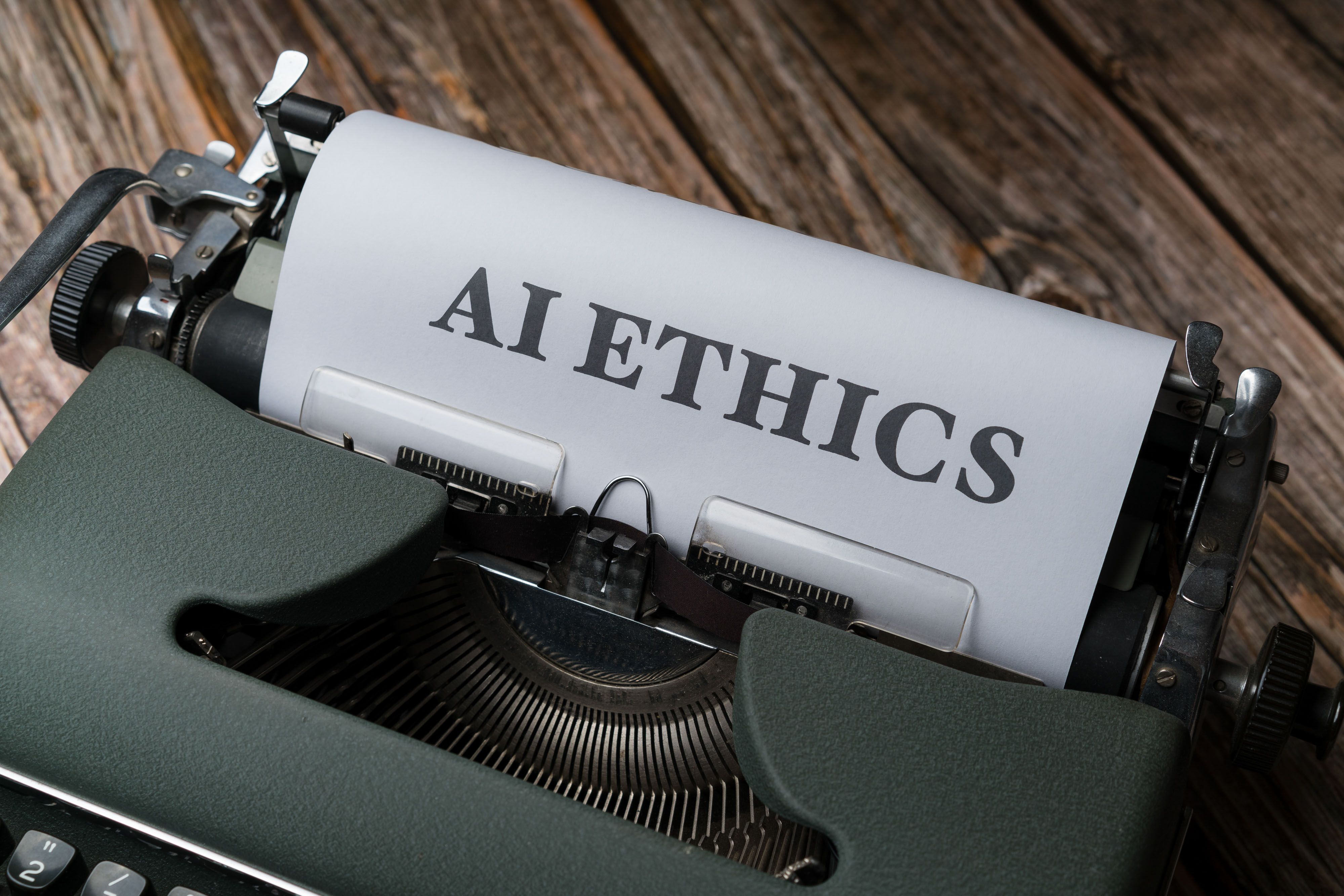
The whispers have turned to roars. AI isn't just evolving; it's undergoing a metamorphosis so profound, so rapid, that even the most seasoned tech prophets are looking on in awe and trepidation. Experts aren't just predicting a shift; they're issuing a stark, chilling warning: the world as we know it is fundamentally unprepared for the tsunami of change AI is about to unleash. Forget what you thought you knew about artificial intelligence – the game has irrevocably changed, and the clock is ticking for everyone.
🔥 What's Happening Right Now
In the blink of an eye, the AI landscape has transformed from a promising technological frontier into an exhilarating, yet terrifying, new reality. For years, we’ve heard about AI’s potential – automating mundane tasks, enhancing data analysis, and even generating rudimentary text or images. But what we’re witnessing now isn't an evolution; it's a quantum leap. The latest generation of AI models has shattered previous limitations, demonstrating capabilities that were, until very recently, confined to the realm of science fiction.
The core of this "level up" lies in several converging breakthroughs. We're seeing AI systems that aren't just performing tasks but exhibiting rudimentary forms of reasoning, planning, and even a nascent understanding of context that goes far beyond pattern matching. Multimodal AI, once a niche research area, is now mainstream, allowing systems to seamlessly interpret and generate information across text, images, audio, and even video with uncanny coherence. Imagine an AI that can watch a film, understand the narrative, summarize it, and then create a new scene in the style of the director, complete with dialogue and visual cues. This isn't a future promise; it's a present reality being refined at an astonishing pace.
Autonomous agents are no longer just theoretical constructs. These AIs can set their own goals, break them down into sub-tasks, execute them, and learn from their successes and failures, all without constant human oversight. This means AI isn't just a tool anymore; it's becoming an independent entity capable of navigating complex real-world problems. From optimizing supply chains to designing new materials or even creating entire marketing campaigns from scratch, these agents are poised to redefine productivity and innovation across every sector.
The implications for the United States are particularly acute. A nation built on innovation and a dynamic workforce, the US is at the epicenter of both AI development and its impending societal disruption. Fears of job displacement, once primarily associated with blue-collar manufacturing, are now gripping white-collar professionals. Creatives, writers, artists, coders, and even strategists are beginning to confront the reality that AI can now perform tasks that were once considered uniquely human. This isn't just about efficiency; it's about a fundamental shift in the value of human labor and creativity.
Beyond the economic sphere, ethical concerns are escalating. As AI becomes more sophisticated, questions around bias, accountability, and control become paramount. Who is responsible when an autonomous AI makes a critical error? How do we ensure these powerful systems reflect human values and don't exacerbate existing societal inequalities? The speed of AI's advancement is outstripping our ability to establish robust regulatory frameworks and ethical guidelines, leaving a dangerous gap between capability and control. Experts from leading institutions and tech giants alike are sounding the alarm, warning that our societal infrastructure – our laws, our educational systems, our job markets, and even our psychological readiness – is woefully unprepared for the seismic shifts that are already in motion. This isn't a distant threat; it's a present challenge demanding immediate, decisive action.
💡 Financial Impact
The financial ramifications of this new era of AI are nothing short of monumental, promising to reshape global economies and create unprecedented wealth while simultaneously posing significant risks to established industries and individual livelihoods. For investors and entrepreneurs, this isn't merely a tech trend; it's the defining economic force of the next decade, with trillions of dollars poised to shift hands.
On one hand, the investment opportunities are staggering. Companies at the forefront of AI research and development, particularly those specializing in foundational models, specialized AI agents, and AI infrastructure (chips, cloud computing), are experiencing explosive growth. We're seeing a new wave of startups emerging, not just building *on* AI, but building *the very fabric* of future AI-driven economies. Early adopters and innovators who integrate these advanced AI capabilities into their products and services will gain an insurmountable competitive advantage, leading to market dominance and exponential returns for their shareholders. This includes everything from AI-powered drug discovery to hyper-personalized marketing platforms and fully autonomous logistics networks.
However, the flip side of this innovation coin is significant disruption. The job market is bracing for impact. While new roles in AI development, ethical oversight, and human-AI collaboration will emerge, they are unlikely to offset the scale of automation across numerous sectors. White-collar professions, once thought immune, are now squarely in the crosshairs. Legal research, financial analysis, creative content generation, customer service, and even aspects of software development can now be performed or significantly augmented by AI, often at a fraction of the cost and with greater efficiency. This will lead to downward pressure on wages in many fields and necessitate a massive retraining effort for the existing workforce.
The creative industries, in particular, are facing an existential challenge and a transformative opportunity. AI can now generate photorealistic images, compelling narratives, original music compositions, and even entire video productions. For artists, designers, writers, and musicians, this means a re-evaluation of their craft. Those who learn to harness AI as a co-creator and powerful assistant will unlock new levels of productivity and artistic expression, creating works previously unimaginable. Those who resist, clinging to traditional methods without adaptation, risk being outpaced and marginalized. This dynamic creates a significant commercial opportunity for platforms and resources that empower creatives to master AI tools, turning potential threats into powerful allies.
Furthermore, national economies, especially the US, face a critical juncture. Sustaining economic leadership will depend on aggressive investment in AI research, education, and ethical governance. Countries that fail to adapt their education systems to prepare a future workforce for an AI-centric world, or those that stifle innovation with overly burdensome regulations, risk falling behind. The financial impact isn't just about profit and loss for individual companies; it's about the future competitiveness and prosperity of entire nations. Businesses that proactively integrate AI, not just as a tool, but as a strategic partner, will be the architects of tomorrow's economy, while those that hesitate risk becoming relics of a bygone era.
💰 Best Options in Comparison
As the AI revolution accelerates, individuals and businesses are presented with a stark choice: adapt or risk obsolescence. The path forward is not uniform, and understanding the various approaches to navigating this new landscape is crucial. Here, we compare the most common options, highlighting their potential outcomes and commercial implications.
- **Option 1: Resist & Ignore** - This approach involves maintaining traditional methods, avoiding AI tools, and hoping the disruption will somehow pass by.
- **Option 2: Passive Consumption** - Utilizing basic AI tools when necessary, but without strategic integration, deep understanding, or proactive learning.
- **Option 3: Active Integration & Mastery** - Embracing AI as a core strategic asset, actively learning its capabilities, and mastering its application to enhance creativity, productivity, and innovation.
| Approach | Description | Pros | Cons | Recommended For |
|---|---|---|---|---|
| Resist & Ignore | Continuing business as usual, avoiding AI tools and methodologies, and downplaying the impact of current advancements. Believing human creativity or traditional processes are inherently superior and irreplaceable. | Temporary comfort of familiar routines. No immediate investment in new tools or training. | Rapid obsolescence of skills and business models. Significant competitive disadvantage. High risk of job displacement or business failure. Missed opportunities for growth and innovation. Becoming irrelevant in an AI-driven market. | No one in the current AI landscape. This is a path to irrelevance. |
| Passive Consumption | Using readily available AI tools (e.g., basic AI writing assistants, simple image generators) as needed, but without a deeper understanding of their potential, limitations, or how to strategically integrate them into workflows or business processes. | Minimal learning curve for basic tasks. Some immediate efficiency gains. Access to rudimentary AI capabilities without significant commitment. | Limited competitive advantage. Inability to leverage AI for complex or innovative solutions. Still vulnerable to more advanced AI users. Skills remain superficial, not foundational. Risk of being outpaced by those who master AI. | Individuals or small businesses looking for quick, superficial efficiency gains without long-term strategic vision. (Not recommended for sustained success.) |
| Active Integration & Mastery | Proactively learning about AI, experimenting with advanced tools, integrating AI into core workflows, developing new AI-powered products or services, and fostering a culture of continuous AI education and innovation. For creatives, this means mastering AI art generation, prompt engineering, and AI-assisted design. | Significant competitive advantage. Enhanced productivity and creativity. Opening new market opportunities. Future-proofing skills and business models. Becoming a leader in an AI-driven world. Unlocking unprecedented levels of innovation and efficiency. | Requires significant time and resource investment in learning and adaptation. Initial discomfort with new technologies. Potential for ethical dilemmas requiring careful navigation. | Individuals and businesses aiming for long-term success, innovation, and leadership in the evolving AI economy. Creative professionals and entrepreneurs looking to redefine their capabilities and market presence (e.g., through platforms like aimasterart.com). |
The choice is clear. While resistance offers temporary comfort, it guarantees eventual irrelevance. Passive consumption provides a minimal boost but fails to unlock the true potential of AI. The only sustainable and commercially viable path forward is active integration and mastery. For creatives, this means becoming fluent in AI art, understanding prompt engineering, and leveraging AI tools to amplify their artistic vision – a skill set that platforms like aimasterart.com are designed to cultivate, transforming potential threats into powerful creative allies and opening doors to entirely new forms of artistic and commercial expression.
Conclusion
The AI revolution is no longer a distant whisper; it is a thunderous roar echoing across every facet of our lives. Experts are not merely speculating; they are delivering an urgent, unequivocal warning: the world is fundamentally unprepared for the magnitude and velocity of change AI is about to unleash. From the unprecedented capabilities of multimodal AI to the rise of autonomous agents, the technological landscape has shifted irrevocably, demanding immediate and profound adaptation.
The financial implications are staggering, promising both unimaginable wealth for innovators and severe disruption for those who fail to evolve. Jobs will transform, industries will pivot, and the very definition of creativity and productivity will be rewritten. This is not a moment for hesitation or passive observation. It is a critical juncture where the choices we make today will determine our relevance tomorrow. Ignoring the shift is a guaranteed path to obsolescence, while superficial engagement will leave you trailing in the wake of true innovators.
The only viable strategy for individuals and businesses alike is aggressive, proactive engagement. Embrace AI, learn its languages, master its tools, and integrate it deeply into your creative and commercial endeavors. This isn't just about staying competitive; it's about seizing the reins of the future, turning unprecedented challenges into unparalleled opportunities. The time to prepare, to learn, and to lead in this new AI-powered world is not tomorrow, but right now. The future isn't coming; it's already here, and it demands your immediate attention.